


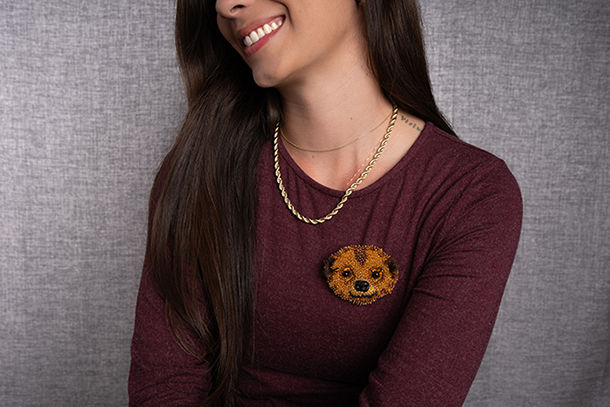


The brooch, history of an accessory: how a simple fastener became a symbol of power
The History of the Brooch
From Ancient Egypt and Roman fibulae to today's runways, the brooch has told stories without saying a word. This is its story—and the starting point for handcrafted brooches made in Colombia.
ANCIENT EGYPT · THE FIRST ROOTS
Long before the courts: brooches on the banks of the Nile
The history of the brooch is much older than we usually imagine. In Ancient Egypt, men and women already used brooches and fibulae to fasten their linen tunics, and these pieces—far from being mere fasteners—were laden with meaning. The winged scarab (khepreh), a symbol of rebirth and protection, was worn pinned to the chest, often set in gold and enameled with lapis lazuli, carnelian, and turquoise.
The treasures found in Tutankhamun's tomb (14th century BC) include pectorals and ceremonial brooches of astonishing craftsmanship: falcon wings, the Eye of Horus, and scarabs that combined beauty with profound spiritual meaning. For the Egyptians, adorning the body was also a way to protect the soul and announce the wearer's status.
A language that spread throughout the Mediterranean
The idea of both fastening and expressing traveled throughout the ancient world. In Mycenaean Greece and later in Rome , fibulae were born , true forerunners of the modern brooch: brooches of bronze, silver, or gold that fastened tunics and togas. Roman legionaries wore them as insignia of rank, and women wore them as everyday jewelry. The Celtic and Viking peoples, for their part, crafted circular and penannular fibulae of exquisite filigree that we admire today in museums.

TIMELINE · A JOURNEY OF MILLENNIA
The brooch through history
C. 1350 BC · EGYPT Sacred scarabs and pectorals Gold and semi-precious stone brooches that protected and announced status, such as those found next to Tutankhamun.
8th century BC – 5th century AD · ROME AND GREECE The fibula, mother of the brooch Closures of tunics and togas that also marked military rank and social class.
8th-11th centuries · CELTS AND VIKINGS Filigree fibulae Circular and pennular pieces with braids and enamels that are now icons of medieval art.
18th Century · EUROPEAN COURTS Symbol of nobility Brooches with precious stones and filigree that communicated lineage, taste and power.
19th Century · VICTORIAN ERA The sentimental brooch Queen Victoria popularized mourning and portrait brooches; they held locks of hair and mementos of loved ones.
20th Century · HOLLYWOOD The divas' signature Placed over the heart, it became a gesture of individuality within everyone's reach.
TODAY · COLOMBIA The Color of Hope Handkerchiefs The brooch is reborn, handmade in Bogotá, as a story of hope and color.
18TH CENTURY · THE COURTLY ORIGIN
A status symbol in European courts
Centuries after Egypt and Rome, the brooch experienced a new golden age. In the European courts of the 18th century, it adorned the dresses of the nobility, often encrusted with precious stones and crafted with intricate filigree.
They were not just ornaments: they communicated lineage, taste, and power. Each piece was a silent declaration of who wore it and the place they held in the world.
Beauty with a purpose
From that time onward, these types of embellishments were no longer exclusive to lapels: they also served to adorn skirts and capes, with uses that went far beyond decoration. Brooches held keys, pocket watches, and even small perfume cases. They were beautiful objects and, at the same time, profoundly useful.

HISTORICAL ANECDOTE
In Victorian times, after the death of Prince Albert, Queen Victoria popularized mourning brooches : jet pieces that often held a lock of hair or a small portrait of the loved one. Thus, the brooch also became a guardian of memory and affection—a spirit very similar to that which inspires our paolines today.
HOLLYWOOD · THE GOLDEN AGE
The personal signature of movie divas
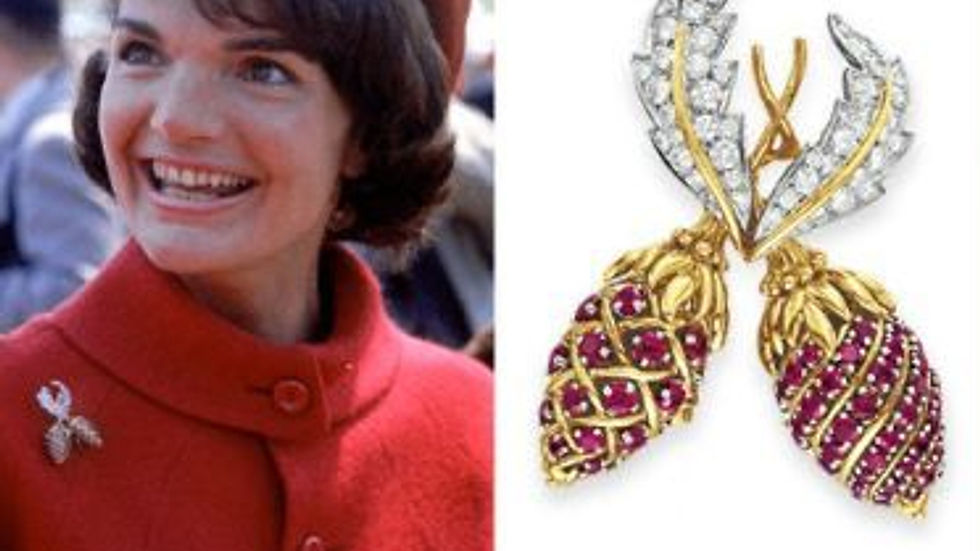
The brooch placed over the heart: sophistication and individuality in a single piece.
Over time, the great divas of Hollywood's golden age of cinema and other influential personalities adopted the brooch as a key piece in their styles, strategically placing it over the heart or in the center of the neckline.
Its power as a message has not been lost: in more recent times, public figures have even used it to send diplomatic signals — a stylistic gesture that, as in Egypt, continues to communicate without the need for words.
“A brooch doesn’t cover up; it reveals. It says something about the wearer long before they speak.”
It was a symbol of sophistication, but also of individuality: each piece spoke of the wearer's personality. The brooch ceased to be a privilege of the nobility and became a stylish gesture accessible to anyone who wanted to express something about themselves.

EVOLUTION · FROM ORNAMENT TO EXPRESSION
An icon that was never rigid
From the Egyptian scarab to the Roman fibula, from the courtly brooch to the jewel of divas: in every era, the brooch has reinvented itself without losing its essence. It has become an icon of classic style, and yet its history has never been rigid. It has evolved while always maintaining that air of distinction that makes it so special. From the ornamental to the expressive, this accessory has told stories without words.
Today we embrace it not only with respect for that age-old tradition, but with a freer and more contemporary vision. The brooch doesn't return as a relic of the past or a mere memory: it comes back as a modern ally to tell who you are—whoever you are—through what you wear. A language that doesn't distinguish between gender or age, only between stories to tell.
TODAY · THE BROOCH, HISTORY OF AN ACCESSORY, AND HOW IT IS REBORN
From that tradition the paolines were born.
At Color de Esperanza, we've taken that legacy that began on the banks of the Nile and reinvented it. Our paolines are the contemporary evolution of the brooch: handmade pieces from Bogotá, Colombia, that combine time-honored craftsmanship with a design created for modern life.
Like those Egyptian scarabs, Roman fibulae, and brooches from the golden age of cinema, a paolín is a small story you wear. Only this one tells a story made with hope, color, and Colombian hands.
Today we revisit it not only with respect for that tradition, but with a freer and more contemporary vision. Here we show that the brooch returns, not just as the story of an accessory, nor as a relic of the past, but as a modern ally to tell who you are, through what you wear.


Comments